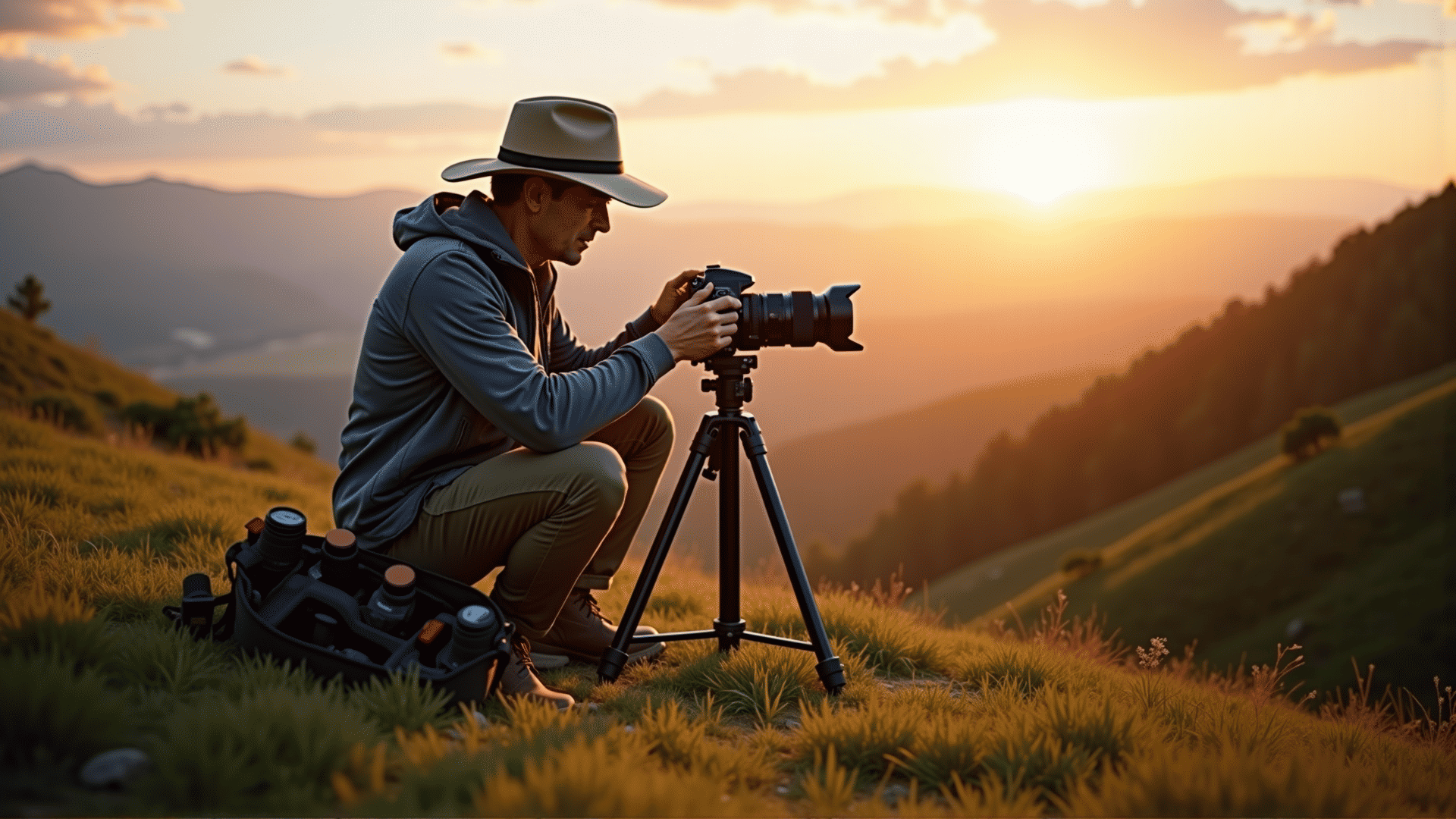
Uncovering the beauty within a moment is at the heart of photography. Whether you're a beginner or seasoned enthusiast, enhancing your skills requires understanding and applying various techniques. Let's explore some fundamental to advanced methods that can elevate your photography and help you capture stunning images.
Understanding Light
Light is an essential element in photography. Learning how to use natural and artificial light can significantly alter the mood and tone of your images.
-
Natural Light: Capturing the golden hour, the period shortly after sunrise or before sunset, can infuse your photos with warmth and softness. Overcast days provide diffused light that reduces harsh shadows, perfect for portrait photography.
-
Artificial Light: Mastering flash techniques allows you to control lighting conditions. Use reflectors to bounce light and soften shadows, or try different positions to experiment with shadows and highlights.
Composition Techniques
Composition is the arrangement of elements within a frame. Good composition can transform an ordinary scene into an extraordinary photograph.
-
Rule of Thirds: Divide your frame into a 3x3 grid and position key elements along these lines or at their intersections for balanced and engaging visuals.
-
Leading Lines: Utilize natural lines to guide the viewer’s eyes towards the subject of your photo, adding depth and dimension.
-
Framing: Incorporate elements like windows, arches, or branches to create a natural frame within your shot, drawing attention to the main subject.
Mastering Your Camera
Understanding your camera’s settings is crucial for taking control of your shoots.
-
Aperture: The f-stop value controls the depth of field. A lower f-stop (e.g., f/1.8) results in a blurred background that's ideal for portraits, while a higher f-stop (e.g., f/16) keeps everything in focus, perfect for landscapes.
-
Shutter Speed: Determines how motion is captured. A fast shutter speed (1/1000s) freezes movement, great for action shots, while a slow shutter speed (1/30s) lets you capture motion blur, adding a sense of speed or fluidity.
-
ISO: Adjusts the camera’s sensitivity to light. A lower ISO (100) is ideal for bright conditions, maintaining image quality, whereas a higher ISO (3200) is suited for low light, albeit introducing some grain.
Post-Processing
Editing is an integral part of photography. Skillful post-processing can enhance a photo’s impact by adjusting exposure, color balance, and sharpness.
-
Software Tools: Familiarize yourself with editing software like Adobe Lightroom or Photoshop. These tools offer vast capabilities to tweak, enhance, and manipulate your images.
-
Color Correction: Adjusting saturation and contrast can make colors pop, adding vibrancy to your photos.
-
Cropping and Rotation: Sometimes, the perfect shot needs a slight crop or rotation. This can correct awkward angles and improve composition.
Creative Experimentation
Embrace creativity by experimenting with various techniques and styles.
-
Long Exposure: Capture stunning night skies or create a sense of movement with long exposure photography. Utilize a tripod to keep the camera steady during extended shots.
-
Macro Photography: Discover intricate details in everyday objects by delving into macro photography, which magnifies the subject.
-
Black and White: Strip an image of color to emphasize texture, form, and contrast, providing a timeless quality.
Improving your skills in photography is a journey filled with discovery and creativity. By understanding light, mastering composition, getting familiar with your camera, leveraging post-processing, and experimenting creatively, you'll be well on your way to capturing the world around you in beautiful, memorable ways. Happy shooting!